Imagine visiting your favorite online store to buy a pair of running shoes.
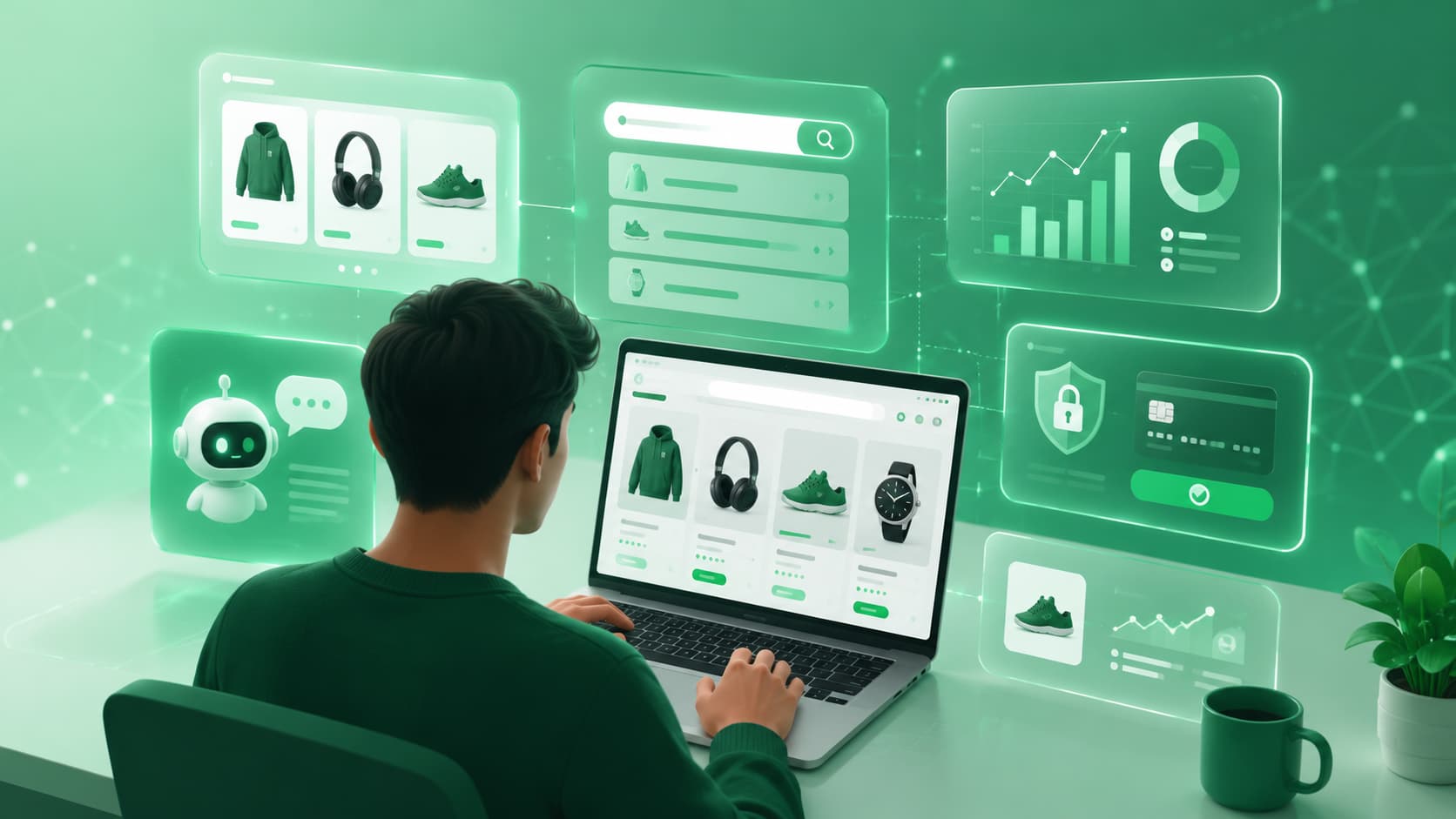
Before you've even typed a single word into the search bar, the homepage already feels different. It highlights products that match your style, recommends accessories based on your previous purchases, and even reminds you that your favorite brand has just launched a new collection. As you browse, an AI-powered assistant answers your questions instantly, compares products, and helps you find the perfect fit. By the time you reach checkout, your preferred payment method is already selected, and the entire purchase takes less than a minute.
This isn't a glimpse into the distant future, it's how leading eCommerce brands are creating shopping experiences today.
Online shopping has evolved far beyond simply displaying products on a website. Customers no longer expect digital stores to act as online catalogs; they expect them to understand their preferences, anticipate their needs, and make every interaction effortless. The businesses that deliver these experiences are increasingly powered by Artificial Intelligence (AI).
According to McKinsey & Company, organizations that effectively adopt AI in customer engagement and marketing are seeing measurable improvements in revenue growth, personalization, and operational efficiency. AI has rapidly moved from being an emerging technology to becoming a key competitive advantage across industries.
For eCommerce businesses, this shift is particularly significant.
Whether it's a growing Shopify store, a Magento-powered marketplace, or a fully custom commerce platform, customers now compare every shopping experience with the best they've ever had not just with your competitors. If your website feels slow, generic, or difficult to navigate, they'll move on within seconds.
The question is no longer 'Should businesses adopt AI?'
The real question is:
Can businesses afford not to?
The Evolution of Online Shopping
Not long ago, running an online store was relatively straightforward.
Businesses focused on creating an attractive website, uploading product images, writing compelling descriptions, and driving traffic through advertising or search engines. Success largely depended on product quality, competitive pricing, and effective marketing.
While these fundamentals remain important, customer expectations have changed dramatically
Today's consumers don't simply want more choices—they want smarter shopping experiences. They expect online stores to remember their preferences, recommend relevant products, answer questions instantly, and remove unnecessary steps throughout the buying journey.
This shift has been driven by the experiences created by companies like Amazon, Netflix, and Spotify. These platforms have conditioned users to expect intelligent recommendations, personalized content, and seamless digital interactions. As a result, these expectations have extended far beyond entertainment and into every aspect of online commerce.
Artificial Intelligence is the technology making this possible.
Rather than replacing human decision-making, AI helps businesses understand customer behavior at a scale that would be impossible manually. It analyzes browsing patterns, purchase history, search intent, and behavioral signals to deliver experiences tailored to each individual visitor.
Instead of every customer seeing the same homepage, the same products, and the same offers, AI enables businesses to create experiences that feel unique for every shopper.
This represents one of the biggest transformations eCommerce has experienced since online payments became mainstream.
How AI Is Transforming Customer Expectations
Every successful eCommerce business has one thing in common—they understand that customer expectations never stand still.
A decade ago, simply offering online shopping was enough to impress customers. Fast forward to today, and that's just the starting point. Customers now expect every interaction to be fast, personalized, and intuitive.
Think about the last time you watched a movie on Netflix. Before you even searched for something to watch, Netflix had already recommended shows based on your viewing history. Spotify creates playlists tailored to your music taste. Amazon suggests products you didn't even realize you needed.
These experiences have fundamentally changed how people interact with digital platforms.
Now, customers expect the same level of intelligence from every online store they visit.
If a customer frequently purchases fitness products, they expect to see relevant recommendations instead of random products. If they're browsing from a mobile device late at night, they expect the experience to be just as seamless as shopping from a desktop during business hours.
Artificial Intelligence makes this possible by analyzing customer behavior in real time and continuously learning from every interaction.
According to Salesforce's State of the Connected Customer Report, 73% of customers expect companies to understand their unique needs and expectations, while 88% say the experience a company provides is just as important as its products or services. These numbers highlight an important shift: businesses are no longer competing solely on price or product quality, they're competing on customer experience.
Reference: https://www.salesforce.com/resources/research-reports/state-of-the-connected-customer/
This is where AI becomes more than just another technology trend. It becomes the engine behind delivering experiences that customers increasingly expect as standard.
Personalization Is the New Storefront
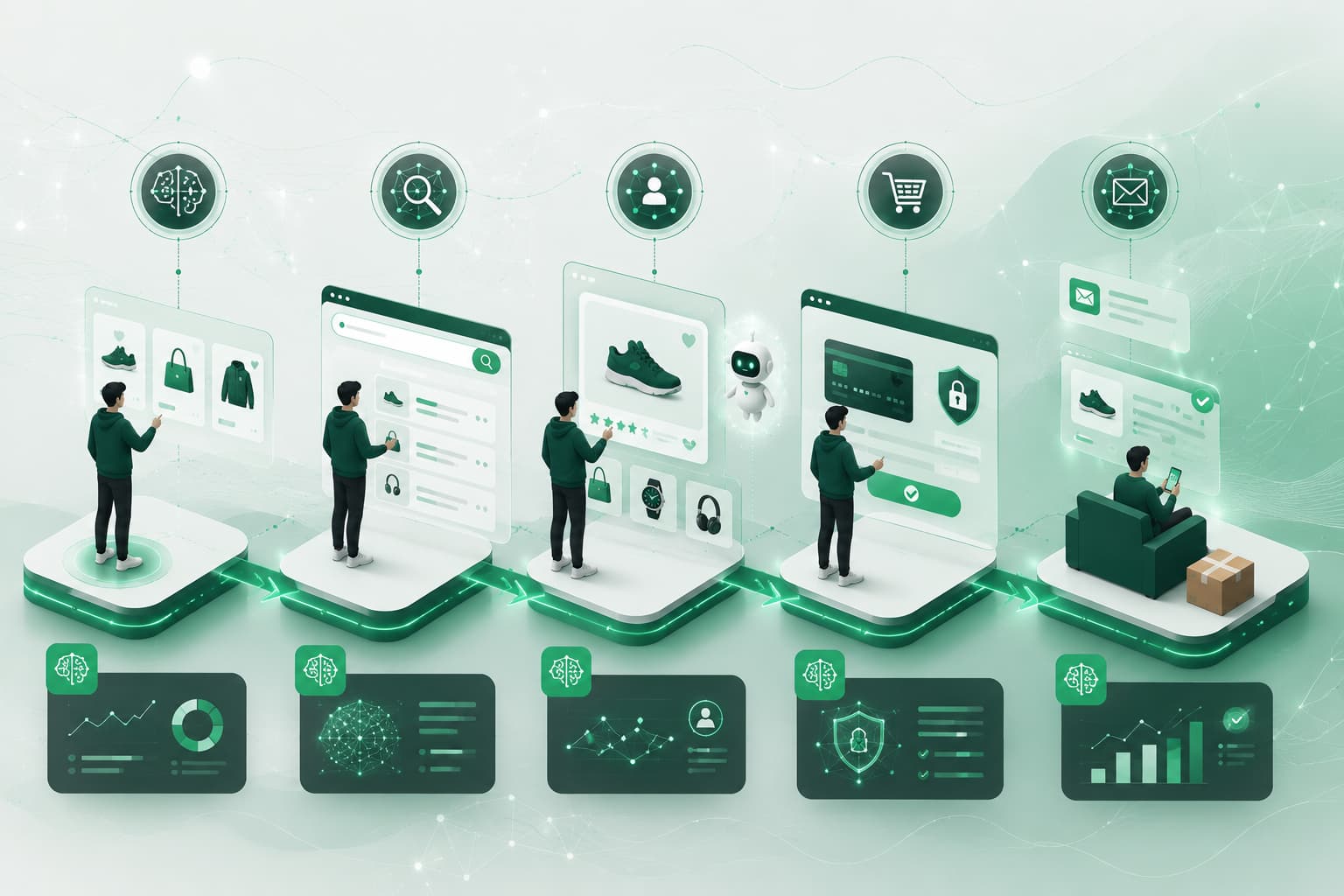
Imagine two customers visiting the same online store.
The first customer is looking for office furniture for a growing startup. The second is shopping for children's toys. If both visitors are shown the exact same homepage, product recommendations, and promotional banners, there's a high chance that neither will feel the experience is relevant.
Traditional eCommerce websites often treat every visitor the same. AI-powered commerce, however, adapts the shopping experience based on each customer's interests and behavior.
It can recommend complementary products, highlight relevant collections, personalize homepage banners, and even tailor promotional offers based on previous interactions.
For example, if a customer has recently purchased a DSLR camera, AI can recommend compatible lenses, camera bags, tripods, and memory cards instead of unrelated electronics. Similarly, if someone regularly shops for organic skincare products, the platform can prioritize newly launched skincare collections over general beauty products.
This level of personalization creates a shopping experience that feels thoughtful rather than transactional.
For businesses, the impact is equally significant. Personalized recommendations encourage customers to explore more products, increase average order value, and strengthen long-term customer loyalty.
Research from McKinsey & Company found that companies excelling at personalization can generate 40% more revenue from those activities than businesses that don't prioritize personalized experiences.
The takeaway is simple: personalization is no longer a premium feature reserved for global brands. With today's AI tools and commerce platforms, businesses of all sizes can deliver experiences that feel relevant, engaging, and customer-centric.
AI Is Reinventing Product Discovery
Finding the right product shouldn't feel like searching for a needle in a haystack.
Yet, this is exactly what many online shoppers experience. They know what they want, but poor search functionality, irrelevant results, and confusing navigation often stand in the way.
Traditional search relies on exact keywords. If a customer doesn't use the right words, they may never find the product they're looking for.
AI-powered search changes this completely.
Instead of simply matching keywords, AI understands context, intent, and natural language.
A customer no longer has to search for 'black leather office chair.'
They can simply type:
"I'm looking for a comfortable office chair for working from home under ₹10,000."
An AI-powered search engine interprets the request, understands the customer's intent, and presents the most relevant products—even if the exact words don't appear in the product title.
This creates a more natural shopping experience, reduces frustration, and helps customers discover products faster.
More importantly, it helps businesses connect customers with products they might otherwise never have found.
AI Is Transforming Customer Support—Without Replacing Human Connections
One of the biggest challenges in eCommerce isn't attracting customers—it's supporting them throughout their buying journey.
Every day, online stores receive hundreds or even thousands of repetitive questions:
- Where is my order?
- Is this product available in my size?
- How long will delivery take?
- Can I exchange this item?
- Which product is right for me?
For growing businesses, answering these questions manually can consume valuable time and resources. Support teams often find themselves handling repetitive conversations instead of focusing on complex customer needs.
This is where AI-powered shopping assistants are making a real difference.
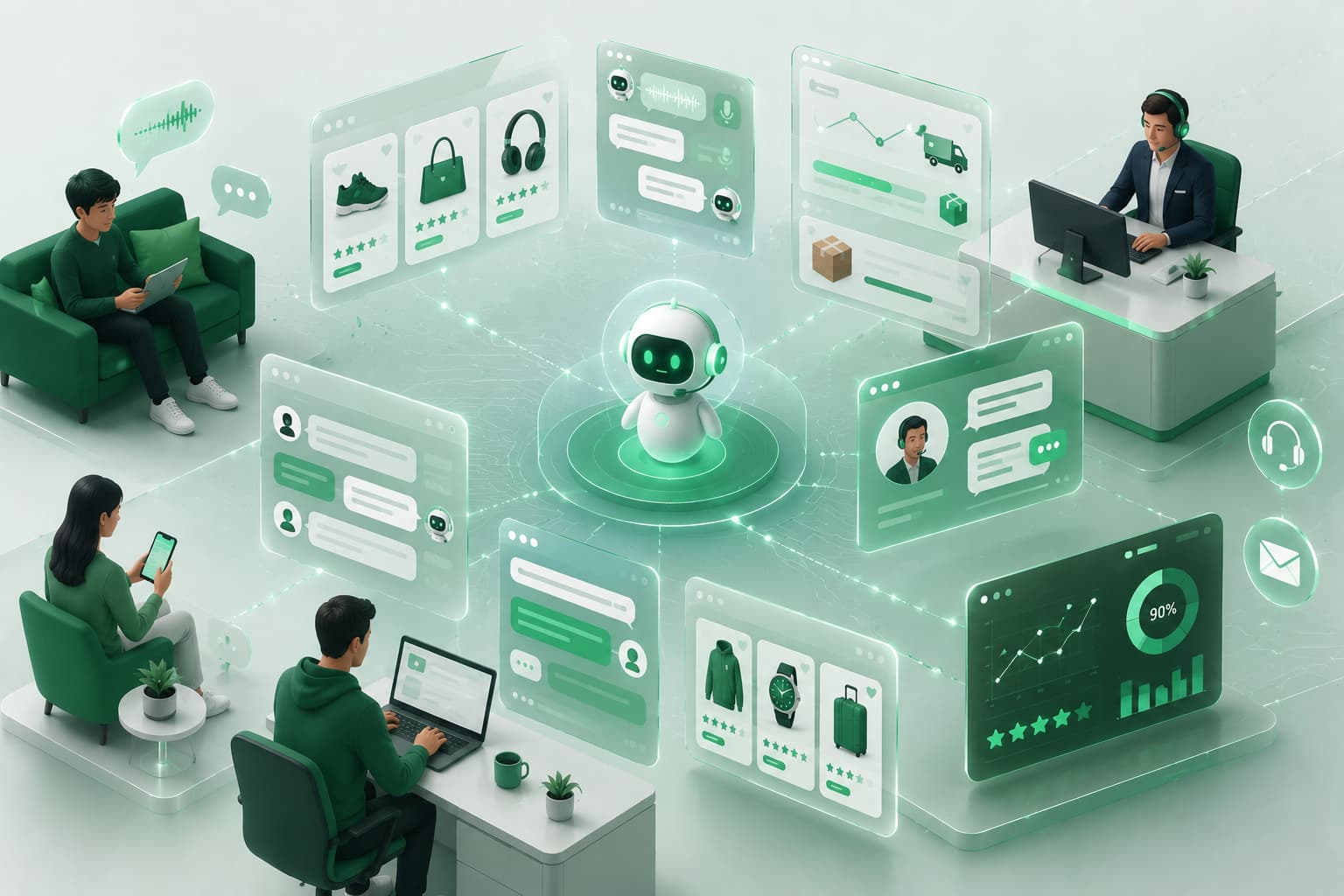
Unlike traditional chatbots that rely on scripted responses, modern AI assistants understand natural language, interpret customer intent, and provide context-aware answers. They can guide shoppers to the right products, track orders, explain return policies, and even recommend alternatives when an item is out of stock.
Imagine a customer browsing your website at 11:30 PM. Instead of waiting until the next morning for a response, they receive instant assistance that helps them complete their purchase. The business captures a sale, and the customer enjoys a seamless experience.
Importantly, AI isn't replacing human support teams—it complements them. By handling routine queries, AI allows customer service representatives to focus on situations that require empathy, expertise, and personalized problem-solving.
According to IBM, AI-powered customer service solutions can significantly reduce response times while improving customer satisfaction and operational efficiency.
Reference: https://www.ibm.com/think/topics/ai-customer-service
Smarter Inventory, Smarter Decisions
Behind every successful online store is an inventory system working tirelessly to ensure products are available when customers need them.
However, inventory management has always been a balancing act.
Order too much, and valuable capital gets tied up in unsold stock. Order too little, and businesses risk losing customers because popular products are unavailable.
Artificial Intelligence helps businesses move beyond guesswork.
By analyzing historical sales data, seasonal demand, customer behavior, promotional campaigns, and market trends, AI can forecast future demand with remarkable accuracy. Instead of reacting to inventory shortages, businesses can prepare for them in advance.
Consider an apparel brand preparing for the festive season. Rather than relying solely on previous year's sales, AI can factor in current shopping trends, regional demand, marketing campaigns, and even external influences to predict which products are likely to perform best.
This enables businesses to reduce overstock, minimize stockouts, and optimize their supply chain—all while improving the customer experience.
The result is a more agile business that can respond to market changes with confidence.
Marketing That Learns From Every Customer
Traditional digital marketing often treats every customer the same.
A promotional email is sent to thousands of subscribers. The same advertisements are shown to every visitor. Every customer receives identical product recommendations.
AI changes this approach entirely.
Instead of broadcasting one message to everyone, AI enables businesses to deliver the right message to the right customer at the right time.
For example, a customer who frequently purchases fitness equipment might receive recommendations for new workout accessories, while another customer interested in home décor sees curated collections based on their browsing history.
AI also helps marketers identify customers who haven't returned in months, automatically trigger personalized re-engagement campaigns, and predict which products are most likely to interest specific audiences.
This level of intelligence helps businesses improve marketing performance while creating experiences that feel genuinely relevant rather than intrusive.
As customer expectations continue to evolve, personalization is no longer a marketing advantage—it's becoming a fundamental part of building lasting customer relationships.
The Future of AI-Powered Commerce
Artificial Intelligence is still in its early stages, but its influence on eCommerce is already impossible to ignore. Over the next few years, online shopping will become even more intelligent, conversational, and personalized.
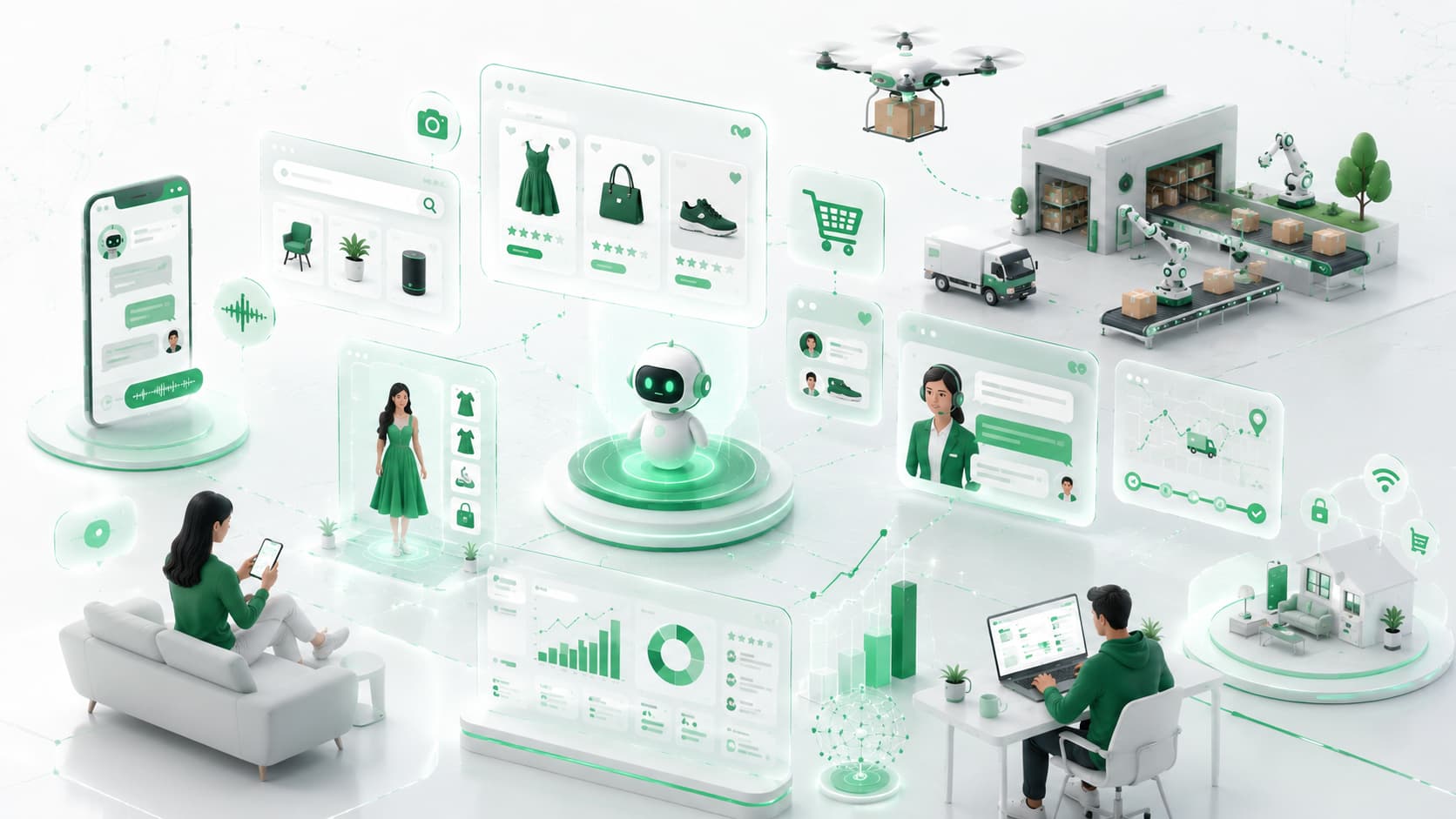
Instead of browsing through hundreds of products, customers will increasingly rely on AI shopping assistants that understand their preferences, compare products, explain differences, and recommend the best options based on budget, lifestyle, and previous purchases.
Voice commerce is also gaining momentum. As voice assistants become more accurate and integrated into everyday devices, customers will be able to search for products, reorder essentials, and complete purchases using natural conversations rather than typing keywords.
Visual search is another innovation reshaping product discovery. Rather than describing an item, customers can upload a photo and instantly find similar products, making shopping faster and more intuitive.
Behind the scenes, AI will continue helping businesses optimize inventory, predict demand, improve marketing campaigns, detect fraud, and automate repetitive workflows. These advancements won't replace human creativity or business strategy—they'll provide businesses with the insights needed to make smarter decisions faster.
The future of eCommerce isn't about replacing people with technology. It's about creating experiences that feel more human by understanding customers better than ever before.
Final Thoughts
Artificial Intelligence is no longer a technology reserved for global retailers or enterprise organizations. Businesses of every size now have access to AI-powered solutions that improve customer experiences, streamline operations, and create new opportunities for growth.
From personalized recommendations and intelligent search to automated customer support and predictive inventory management, AI is redefining every stage of the online shopping journey. What was once considered an innovation is quickly becoming an expectation.
For business owners, the opportunity extends beyond adopting new tools. It's about reimagining how customers discover products, interact with brands, and build long-term relationships in an increasingly digital world.
The businesses that succeed in the coming years won't simply sell products online they'll create intelligent shopping experiences that understand, assist, and evolve alongside their customers.
As eCommerce continues to evolve, one thing is becoming increasingly clear: the future of online shopping won't just be digital, it will be intelligent.